


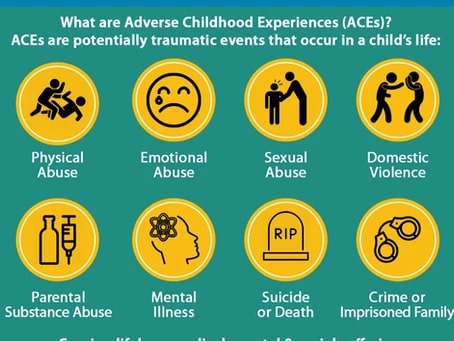
19 Oct What did the Adverse Childhood Experiences Study (ACES) teach us?
Children are not naturally resilient to the loss of someone they love. Yet for decades, AFCC‑aligned psychologists, attorneys, judges, social workers, therapists, and custody evaluators have promoted this myth to sustain a $50‑billion‑a‑year industry. In family and juvenile dependency courts, this industry has justified separating young children from the people who love them — often without any proof of true necessity — for more than half a century.
Parents know better. Many toddlers can barely handle losing their favorite blanket or binky, let alone the sudden loss of a parent. A child’s mind does whatever it must to survive overwhelming emotional pain. That’s why lost toddlers are sometimes found physically unharmed after days alone — their minds shift into survival mode. But this survival mode can cause deep psychological splitting when courts separate them from someone they love.
In psychology, splitting is a defense mechanism where a child (or adult) mentally divides people or experiences into all good or all bad because their brain cannot yet hold mixed, complicated emotions at the same time. It’s most common in young children, because their brains are still developing the ability to process loss, fear, and conflicting feelings When something overwhelming happens – like being separated from a parent – the child’s mind “splits” the experience so they can emotionally survive it. A young child’s brain is not mature or experienced enough to understand “I love my Mom but I am not allowed to see or talk to her” so the child’s mind protects the child by simplifying the world into “Mom is gone, Dad is here” leaving the room for lifelong parental alienation.
If the child feels unsafe, the internal narrative may shift to “I’m scared and no one helps me” activating deep survival responses, or worse, lifelong consequences. Age at intervention when this occurs can impact long-term outcomes–research has shown that the earlier a child is treated, the better chance the child will have to articulate pain and discomfort in later life. The ACES study has definitely confirmed that many children are not able to recover from these adverse childhood experiences.
When courts separate children from a parent, especially without true necessity, the child’s mind may:
- shut down painful memories
- idealize one parent and reject the other
- bury trauma so deeply it resurfaces years later
- appear “fine” on the outside while suffering internally
This why the AFCC claim that “children are resilient” was so misleading. They don’t bounce back — they adapt to survive, and the cost often shows up later in life. Now the AFCCnet.org provided tools like the Parental Acceptance‑Rejection Questionnaire or the Bene‑Anthony Family Relations Test attemptinng to measure the effects of splitting. But these tests can’t measure the future impact of trauma — and certainly not the lifelong consequences of losing a parent:
- they are extremely limited
- they cannot predict long‑term harm
- they are unreliable with young children
- they cannot capture the full emotional reality of forced separation
You can take the ACES study on the CDC website in order to learn more.