
20 Oct The Hidden Double‑Dipping Behind California’s Child Support System
California allows “double dipping,” but this is a court practice, not a statute that “allows double dipping” in general because double dipping is illegal. An example of double dipping is when the federal government give you a tax credit, but then you turn around and also claim it as a deduction on your personal tax returns. Here is how California “double dips” on child support under Title IV‑D of the Social Security Act:
The federal government reimburses California for a portion of their child‑support enforcement cost. So, the more California collects from parents, the more money California gets from the Feds. California is incentivized to have collection procedures to establish paternity, child support orders and especially to collect arrears – even from parents on welfare. California keeps these support payments and interest to reimburse itself for whatever it can. So, it is a circular equation for California and on top of that, decades ago, California added in a 10% lucrative interest charge on arrears. This is a long‑criticized policy because it means:
- The child doesn’t actually receive the support.
- The paying parent thinks they’re supporting their child, but the money goes to the state.
- These are arrears owed directly to the custodial parent that the State takes instead. Many parents report that they never receive any portion of the lucrative 10% interest charge on arrears
- DCSS applies payments in ways that prioritize state‑owed balances first.
- Accounting is not completed well to track this
- It is one of the highest rates in the nation
- It is not compounded, but at 10% it still grows extremely fast.
- A parent who falls behind can owe more in interest than in principal within a few years and many parents end up owing perpetual arrears even after the child is an adult
- California’s arrears are among the highest in the U.S.
- The claim parents make that California keeps the interest is accurate for assigned arrears, and often functionally true for unassigned arrears because of how payments are allocated.
“It’s a profitable double dipping scheme.”
- The State receives federal money for collecting.
- The State keeps child‑support payments when welfare is involved.
- The State earns 10% interest on arrears owed to it.
- The State has no incentive to reduce arrears or interest rates.
- Parents can remain trapped in debt for decades.
Many non‑custodial parents genuinely want to support their children, but they also want meaningful time with them. More parenting time typically reduces child‑support obligations, which means there’s often resistance—through court orders or the absence of orders—to expanding the non-custodial parent’s visitation. In fact, California judges routinely restrict or even deny visitation until support is paid, which creates a cycle of parental alienation that the parent cannot escape and the damage to our society cannot be measured.
California law presumes that parents are fit and entitled to “frequent and continuing contact” with their children. In theory, this protects parent‑child relationships and helps reduce alienation. In practice, however, members of the Association of Family and Conciliation Courts (AFCC) frequently recommend no contact or supervised visitation, even when the evidence is thin. The extremely low evidentiary threshold used to label a parent “unfit” was shaped by AFCC‑aligned professionals, creating yet another mechanism through which parents are funneled into costly evaluations, supervision programs, and court processes in both family and juvenile dependency courts.
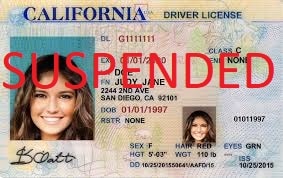
California’s DCSS uses a series of enforcement tactics that often feel counterintuitive — even counterproductive — for a system supposedly designed to support children. The agency routinely suspends parents’ driver’s licenses, freezes bank accounts (including joint accounts held with a minor or college‑aged child), and halts professional and occupational licenses such as teaching credentials, contractor licenses, and business permits. It can even enlist the federal government to block or deny U.S. passport renewals for any parent who owes as little as $2,500 in back child support.
Need a REAL ID? Not if DCSS has placed a hold on your license. Need a job? California lawmakers have repeatedly introduced legislation to create a public registry of parents behind on child support — a list employers could check before hiring. And beyond financial penalties, DCSS frequently uses civil “Contempt of Court Orders” when parents fall behind on payments, even when the underlying issue is an inability to pay rather than a refusal.