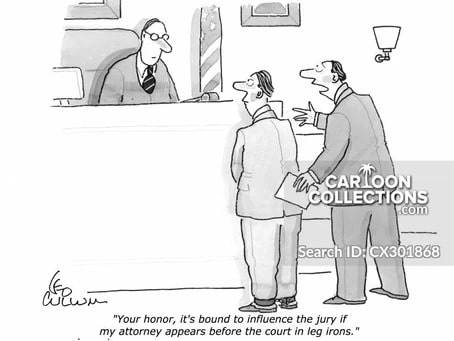
Both the Alex Jones–Kelly Jones case and the Jeff Younger–Anne Georgulas case went to jury trials. The Jones case is over, the children are all adults now. In the Jeff Younger and Anne Georgulas pediatrician case, the parents share joint custody of their twin boys who are now 14 years old. Although judges in those cases had some influence over the proceedings, they did not have the authority to direct a jury to reach a particular verdict. A judge’s role is limited to interpreting the law, managing courtroom procedure, and ensuring that the jury’s decision is based on the evidence and the correct legal standards. Judges can instruct juries on the burden of proof they must apply, but they cannot tell jurors how to interpret the facts.
In criminal cases, the burden of proof is extremely high. In family courts, however, the evidentiary standard is far lower—so low that it often feels as though there is barely a standard at all. As a result, even when a party requests a jury, judges still wield significant power in shaping the outcome.
A dramatic example of judicial power overruling a jury occurred in India. Commander Kawas Manekshaw Nanavati, a highly respected naval officer, was tried for killing his wife Sylvia’s lover. After dropping his wife and children at the movies, he confronted the man and shot him. A jury acquitted Nanavati.
However, two judges—Shelat and Naik—overturned the jury’s verdict, ruling that the killing was premeditated because Nanavati had time to cool off before the confrontation. They convicted him of murder and sentenced him to life in prison. The Supreme Court upheld the conviction, with Justice Subba Rao declaring that “the jury system is not suited to the conditions obtaining in this country.” As a direct result of this jury’s decision to acquit, India abolished jury trials more than 60 years ago.
The hope is that such a loss of jury rights never occurs in the United States, where the jury system remains a core protection against judicial overreach.
We use cookies to improve your experience on our site. To find out more, read our privacy policy and cookie policy. By continuing to browse this site, you agree to our use of cookies.
To learn more, please read our privacy policy & cookie policyI'm okay with that
Manage consent
Privacy Overview
This website uses cookies to improve your experience while you navigate through the website. Out of these, the cookies that are categorized as necessary are stored on your browser as they are essential for the working of basic functionalities of the website. We also use third-party cookies that help us analyze and understand how you use this website. These cookies will be stored in your browser only with your consent. You also have the option to opt-out of these cookies. But opting out of some of these cookies may affect your browsing experience.
Necessary cookies are absolutely essential for the website to function properly. This category only includes cookies that ensures basic functionalities and security features of the website. These cookies do not store any personal information.
Any cookies that may not be particularly necessary for the website to function and is used specifically to collect user personal data via analytics, ads, other embedded contents are termed as non-necessary cookies. It is mandatory to procure user consent prior to running these cookies on your website.